Europe Auto Shakeup

Pankaj Singh
| 24-11-2026
 · Auto Team
Europe's automotive market may look stable over the next decade, but the companies competing within it could face major changes. A forecast from French consultancy Inovev suggests that sedan and SUV sales will remain close to today's level through 2035.
At the same time, Chinese manufacturers are expected to expand their presence significantly, putting pressure on established automakers and suppliers. The challenge is not simply about how many vehicles Europe will sell. It is also about who will build them, which technologies will shape future models, and how manufacturers will adapt to a more crowded market.
Stable Sales, Changing Competition
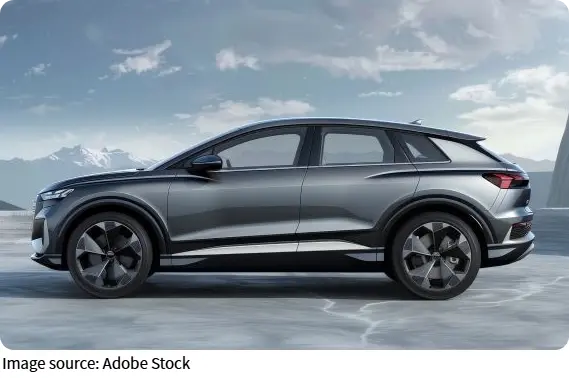
Inovev forecasts that sales of sedans and SUVs in Europe will reach 16.7 million vehicles in 2035, compared with 16.9 million in 2026. The relatively small difference suggests that the overall market could remain broadly stable.
The competitive landscape, however, may look very different. Inovev expects Chinese manufacturers to increase their European market share from 7% in 2025 to 15% in 2035. Other forecasts are even higher. AlixPartners expects a 16% share by 2030, while Bernstein projects 18.7% by 2035 and UBS estimates 20% by 2030.
Inovev also expects 1.6 million Chinese sedans and SUVs to be manufactured in Europe by 2035, excluding Geely's Volvo operations. These projections point to a market where established European companies may face stronger competition even if total vehicle sales do not change dramatically.
Chinese Brands Expand Their European Presence
Around 50 Chinese brands are seeking opportunities in Europe, according to Inovev. Some are already familiar to buyers, while others remain relatively unknown in the region. The companies and brand groups mentioned include BYD and its Denza subsidiary; Chery, with Omoda, Jaecoo and Lepas; and SAIC, which owns MG. Other names include Leapmotor, Great Wall Motor, Aito, Changan, GAC, Li Auto and Maxus. Geely is also expanding through brands such as Lynk & Co and Volvo.
These manufacturers are bringing electric vehicles that the article describes as technologically advanced and competitively priced. The European market is attractive to them partly because sales there can offer margins of up to 30%, despite EU import tariffs exceeding 40% in some cases.
However, those opportunities may become harder to maintain as more companies enter the market. A larger number of competitors will be pursuing the same customers and distribution opportunities, making it difficult for every newcomer to achieve lasting success.
Competition Will Also Intensify Among Chinese Brands
The growing number of Chinese manufacturers could create pressure within their own group as well as against European rivals. Zoran Matovic, managing director of Auto Business & Enterprise in Serbia, told Forbes that newer Chinese brands would compete for more than vehicle buyers. They would also seek established dealers, attractive showrooms, experienced employees, fleet customers and investment funding.
This means that entering Europe successfully will require more than offering a competitive vehicle. Manufacturers will need to build a dependable local presence and secure the resources needed to support customers. Matovic expects established European brands to remain in the market, but believes they will not all survive in their current form. Premium manufacturers with strong reputations, loyal customers and the ability to maintain prices may be better positioned.
Suppliers Face a Difficult Transition
The pressure may be particularly serious for automotive suppliers. Ferdinand Dudenhöffer, director of Germany's Center for Automotive Research, expects many established vehicle manufacturers to find ways to adapt, but sees a more difficult outlook for suppliers. He pointed to changes in battery production and vehicle software as important challenges. As electric powertrains become more prominent and more vehicle functions depend on digital systems, suppliers may find that their traditional areas of business are becoming less central.
Frank Schwope, an automotive consultant and lecturer at FHM Berlin, also highlighted two major technological changes: electric mobility in the present and autonomous driving during the 2030s. He said Chinese manufacturers have developed strong capabilities in both areas.
Schwope expects only five to ten Chinese manufacturers to remain successful in the longer term. He also identified Opel, Lancia, DS and Volkswagen's SEAT as European brands facing particular pressure. One possible way to keep some brands operating, he suggested, is badge engineering, where vehicles based on shared technology are sold under different brand names.
Partnerships Could Shape the Next Generation
Cooperation between manufacturers may become increasingly important as vehicle technology develops. Dudenhöffer expects future cars to incorporate significant amounts of Chinese technology, including autonomous driving capabilities, Level 4 systems and smart cockpit features.
He pointed to existing partnerships such as Stellantis with Leapmotor and Volkswagen with XPeng as examples of cooperation that other manufacturers may follow. Digital technology suppliers will also play a larger role. Dudenhöffer named Nvidia alongside Chinese companies including Huawei, CATL, Gotion, Horizon Robotics and Baidu as businesses likely to influence future vehicles.
Europe's car market may remain similar in size through 2035, but that does not mean the industry will remain unchanged. Partnerships could help established manufacturers respond, but the transition will not be equally easy for every company.